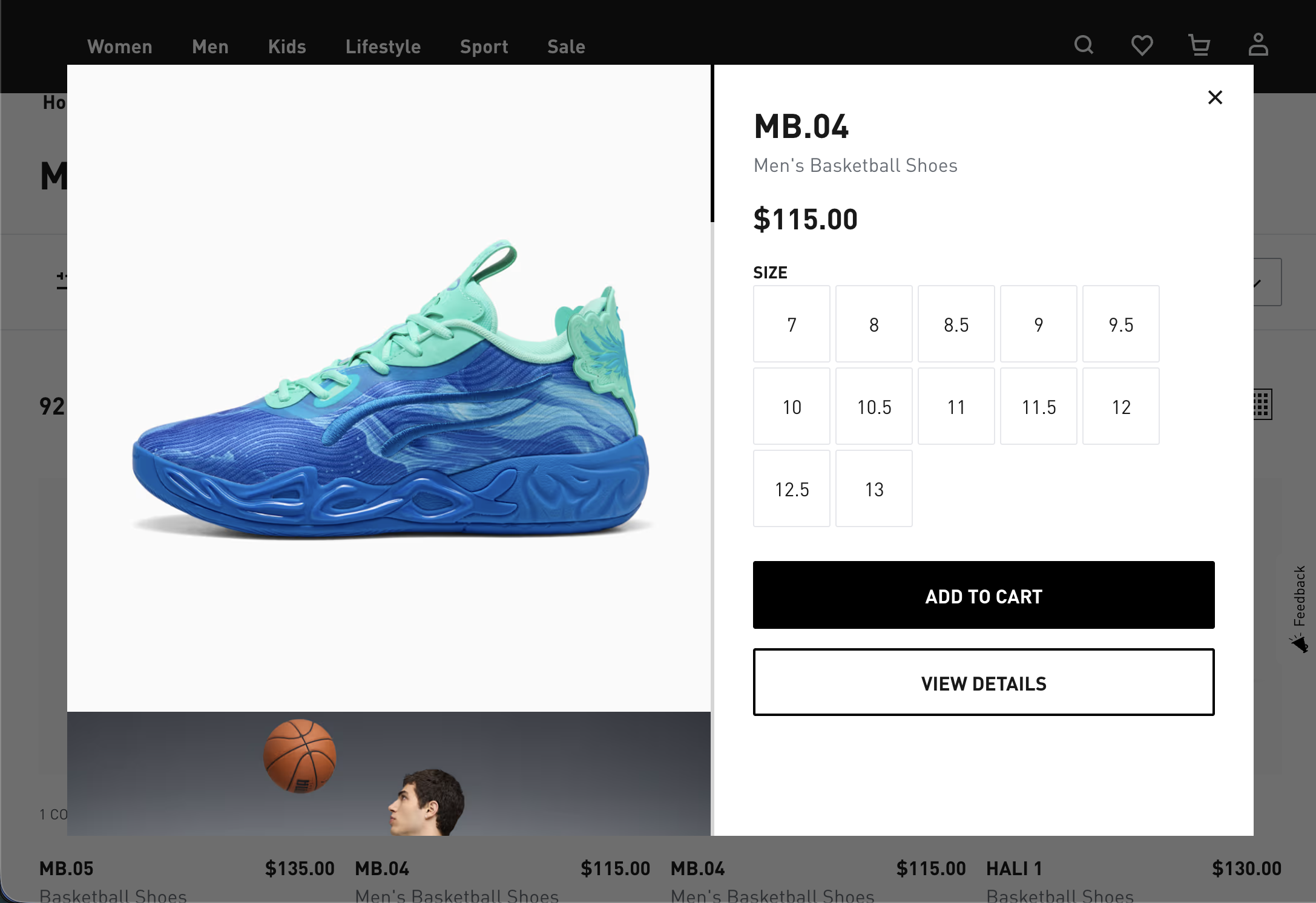
- Reduce friction in the path to purchase by allowing users to view product details and add to cart without leaving the product listing page
- Simplify product detail page content to be displayed in a compact modal
- Prove the value of the Quick View modal before engaging backend development
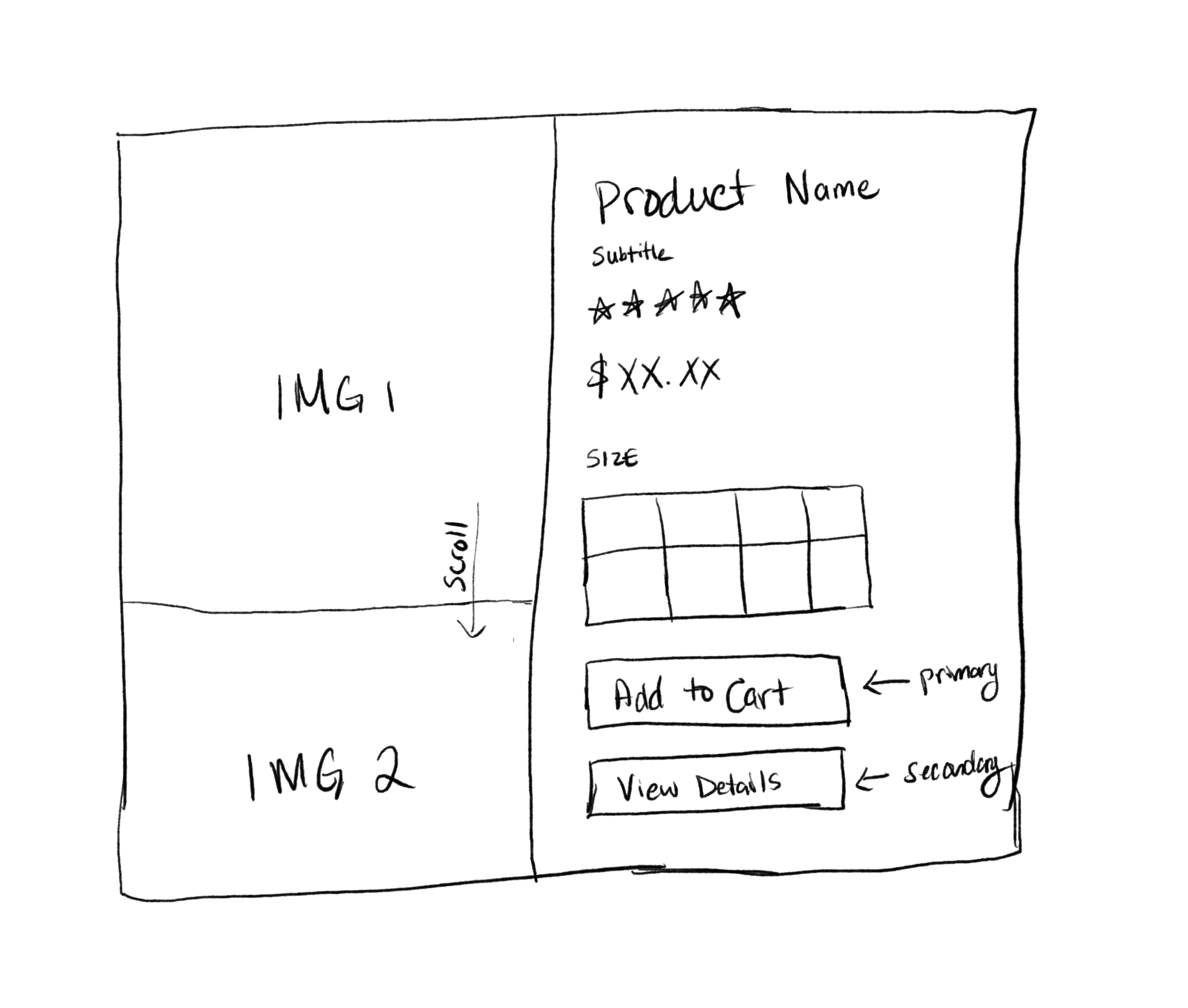
This A/B experiment presented both UX and technical challenges. The core UX challenge was in determining which elements of the product detail page were essential to support a purchase decision, and which would add unwanted complexity to a condensed modal context. I prioritized elements that directly enable conversion: images, size selection, price, and a primary add-to-cart CTA. To ensure users who wanted the full PDP experience were not stranded, I included a secondary "View Details" CTA to direct them to the full product detail page.
The implementation challenge was in enabling this functionality within only a client-side context, with no backend access and no API documentation to work from. To do this, I reverse-engineered both the product detail and add-to-cart APIs by analyzing the network requests made by the existing product detail page (identifying endpoints, required parameters, and session data stored in cookies), then recreated those calls within the experiment. Handling loading states and post-ATC behavior was critical to ensure the modal behaved consistently with the rest of the site's existing product interactions.
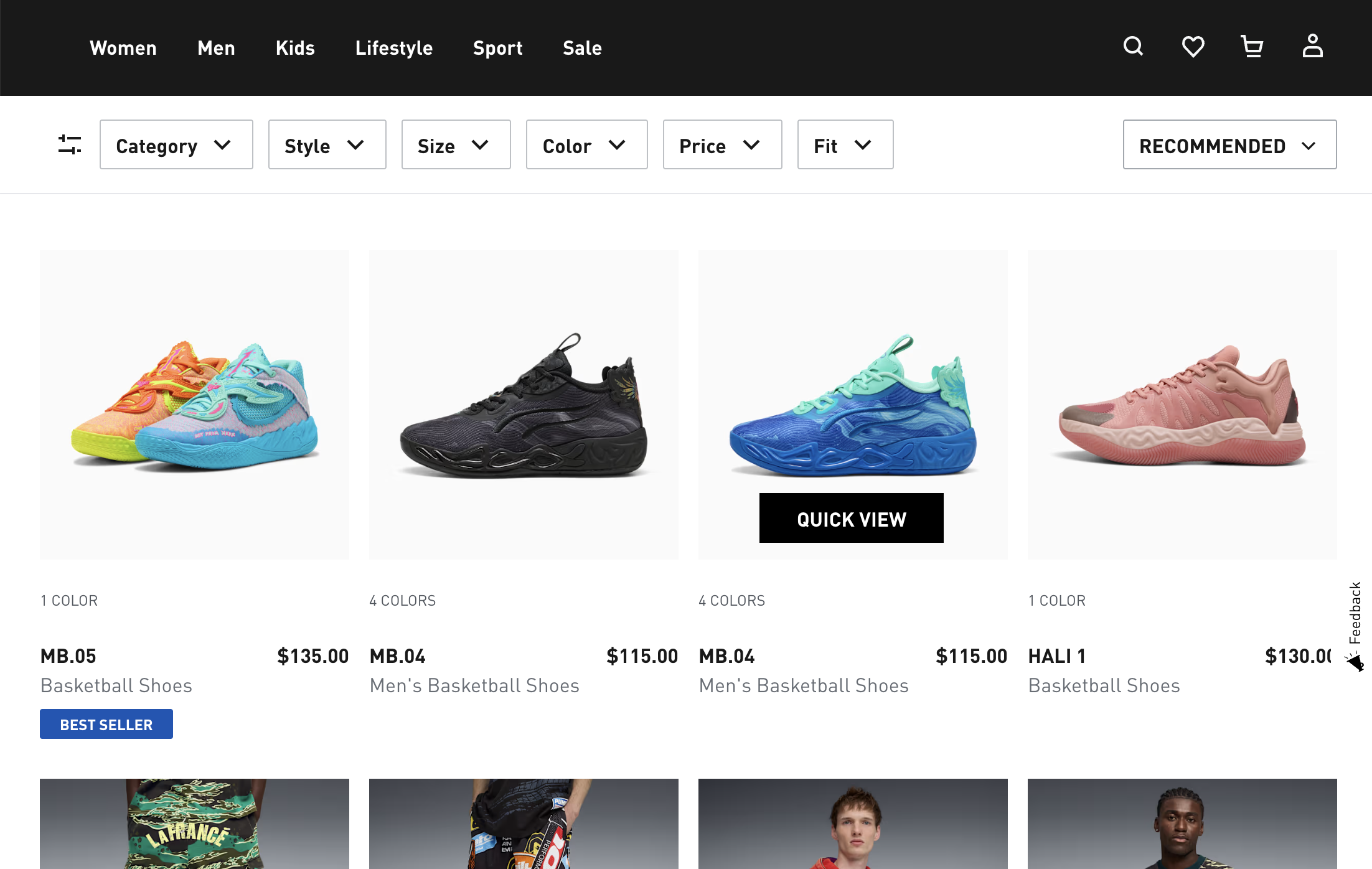
The experiment produced a 4% increase in cart additions, validating both the UX hypothesis and the technical approach. The result made a strong case for allocating development resources to implement the feature permanently, and became a go-to example of handling a seemingly impossible request through creative front-end problem-solving.